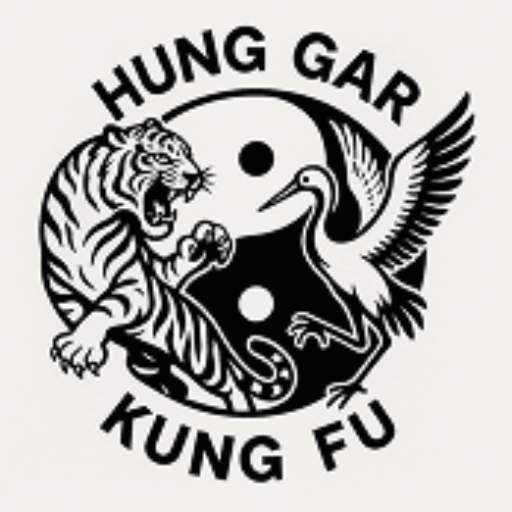
Hung Gar Kung Fu is a southern Chinese martial art with roots in the Shaolin temple tradition of the 17th century. It is best known for its powerful stances, bridge hand techniques, and the famous Tiger-Crane combination that defines its character. Students in Reading train Hung Gar because it builds genuine physical strength, mental discipline, and a lifelong connection to one of China's most respected martial lineages.
This guide covers the origins of Hung Gar, its founder, its core techniques, and why it remains a practical and rewarding martial art to learn today.
Hung Gar is a traditional Chinese martial art from Guangdong Province in southern China. The style combines the powerful striking techniques of the Tiger with the swift, fluid movements of the Crane. These two animals represent strength and grace — the core balance that Hung Gar practitioners develop through years of training.
The name Hung Gar translates directly as "Hung Family Fist." Hung refers to the founding family lineage. Gar means family or household. It is one of the five major southern Chinese kung fu styles alongside Wing Chun, Choy Li Fut, Pak Mei, and Mok Gar.
Hung Gar places heavy emphasis on low, rooted stances. The horse stance — ma bu — is foundational. Students develop stability, leg strength, and power by holding and moving through this stance repeatedly. Stability in the lower body translates directly to power in the upper body, and this principle runs through every technique in the system.
Hung Gar traces its origins to the Southern Shaolin Temple in Fujian Province during the Qing Dynasty. Historical records and oral tradition place its development in the late 17th and early 18th centuries, following the destruction of the Shaolin Temple by Qing forces.
Jee Sin Sim See — a senior Shaolin monk — is credited as one of the primary transmitters of the style's foundational knowledge. He trained Hung Hei-gun, a tea merchant and martial arts student from Guangdong, in the Tiger techniques of the Shaolin system. Hung Hei-gun combined this with Crane techniques from his wife, Fong Wing Chun, to develop what became the complete Hung Gar system.
Hung Gar grew in prominence through the 19th century. Wong Fei-hung, one of the most celebrated martial artists in Chinese history, was a fourth-generation practitioner of the style. His reputation for skill, discipline, and moral character elevated Hung Gar's status across southern China and, eventually, across the world. He became the subject of over 100 films and television series — a cultural figure inseparable from the identity of Hung Gar itself.
The style reached the United Kingdom through the Chinese diaspora in the 20th century. British students now train Hung Gar in cities across England, including at the Reading School of Martial Arts, where Sifu Wayne teaches the traditional curriculum passed down through the lineage.
The Tiger represents raw power, bone conditioning, and aggressive striking. Tiger techniques focus on clawing, grabbing, and crushing strikes delivered with the fingers, palm, and forearm. Tiger training builds tendon strength and develops the kind of power that comes from the whole body rather than the arm alone.
The Crane represents precision, speed, and evasion. Crane techniques use the one-finger strike, wing blocks, and sweeping footwork to redirect and counter an opponent's force. Crane training develops sensitivity, timing, and balance.
Together, they form a complete system. Power and precision. Aggression and evasion. Attack and defence.
Advanced Hung Gar training includes five animal forms: Tiger, Crane, Leopard, Snake, and Dragon. Each animal trains a different quality.
Students develop each quality separately before integrating them into fluid, responsive movement.
The bridge hand is the defining technique of Hung Gar. The bridge refers to a contact point between two practitioners — the forearm-to-forearm connection made when engaging an opponent. Hung Gar trains students to feel, redirect, and control the opponent through this bridge.
Bridge hand training develops sensitivity and structural strength simultaneously. It is why Hung Gar practitioners can neutralise force efficiently rather than meeting it with brute resistance.
Hung Gar students learn a structured progression of forms. The foundational form is Gung Ji Fuk Fu Kuen — Taming the Tiger. This form trains every major Hung Gar principle: stance work, bridge hands, Tiger strikes, and the correct use of power from the centre.
From there, students progress through Tiger-Crane, Five Animal Five Element Fist, and ultimately the Iron Wire Form — one of the most demanding forms in the entire Chinese martial arts canon, designed to develop internal power and iron-body conditioning.
Hung Gar is not a quick-result system. Its training builds genuine capability over time. Students who commit to the curriculum develop:
The philosophy behind Hung Gar is grounded in Chinese Confucian and Buddhist values. Respect for the instructor, perseverance through difficulty, and humility in training are core to how the art is taught and practised.
The Reading School of Martial Arts teaches Hung Gar Kung Fu at Saint Bart's Church on London Road, Reading (RG1 3QA). Sifu Wayne Husbands provides instruction for adults, children aged 5 to 17, and women's classes.
Classes cover the complete Hung Gar curriculum — from foundation stances and bridge hands through to advanced forms training. Beginners are welcomed regardless of previous experience. The first class is free.
To start your training, contact Sifu Wayne:
Phone: 07916 938105
Email: Sifu@ReadingSchoolOfMartialarts.co.uk


